New Delhi: Magh Bihu, also known as Bhogali Bihu, is Assam’s harvest festival celebrated on January 14, marking abundance, gratitude and community bonding. Observed alongside festivals like Lohri, Thai Pongal and Makar Sankranti, Magh Bihu centres on food, fire and togetherness. Among its many traditions, one unusual ritual often intrigues outsiders, which is the practice of stealing vegetables and wood on the night before Bihu, an act accepted, encouraged and a crucial part of festive rituals.
This playful tradition takes place on Uruka, the night preceding Magh Bihu, when villages come alive with feasts and preparations. What appears as mischief carries deeper cultural meaning, linked to harvest sharing, communal spirit and symbolic abundance. Understanding this ritual offers insight into Assam’s agrarian roots and its warm, inclusive approach to celebration passed down across generations.
Ritual behind Magh Bihu’s ‘stealing’ tradition
What is Uruka night
Uruka marks the eve of Magh Bihu and is dedicated to celebration and feasting. Families and communities gather near fields to cook together, marking the end of the harvest season with shared meals and laughter.
Building bhelaghar
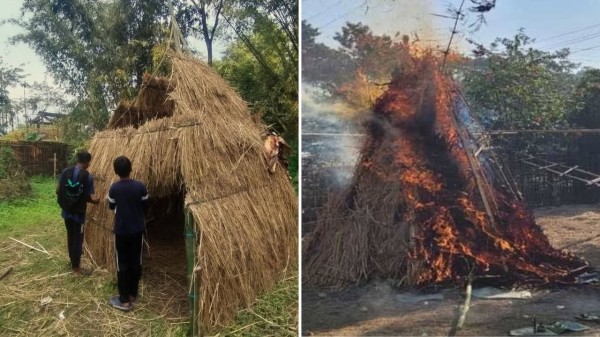
A temporary hut called the Bhelaghar is constructed using bamboo, hay and agricultural leftovers. It becomes the centre of festivities on Uruka night, hosting communal cooking and celebrations.
Why is stealing vegetables and wood allowed
On Uruka night, village boys traditionally ‘steal’ vegetables and firewood from nearby gardens. Families often guard their produce, but the act is carried out in good humour. The ritual symbolises abundance after harvest, where sharing outweighs ownership.
Snacks roasted over an open fire
Whatever vegetables or wood the children manage to collect are brought back to the Bhelaghar. These are roasted over open fires and eaten as snacks, adding excitement and bonding to the evening.
Using stolen wood for Meji and Bhelaghar
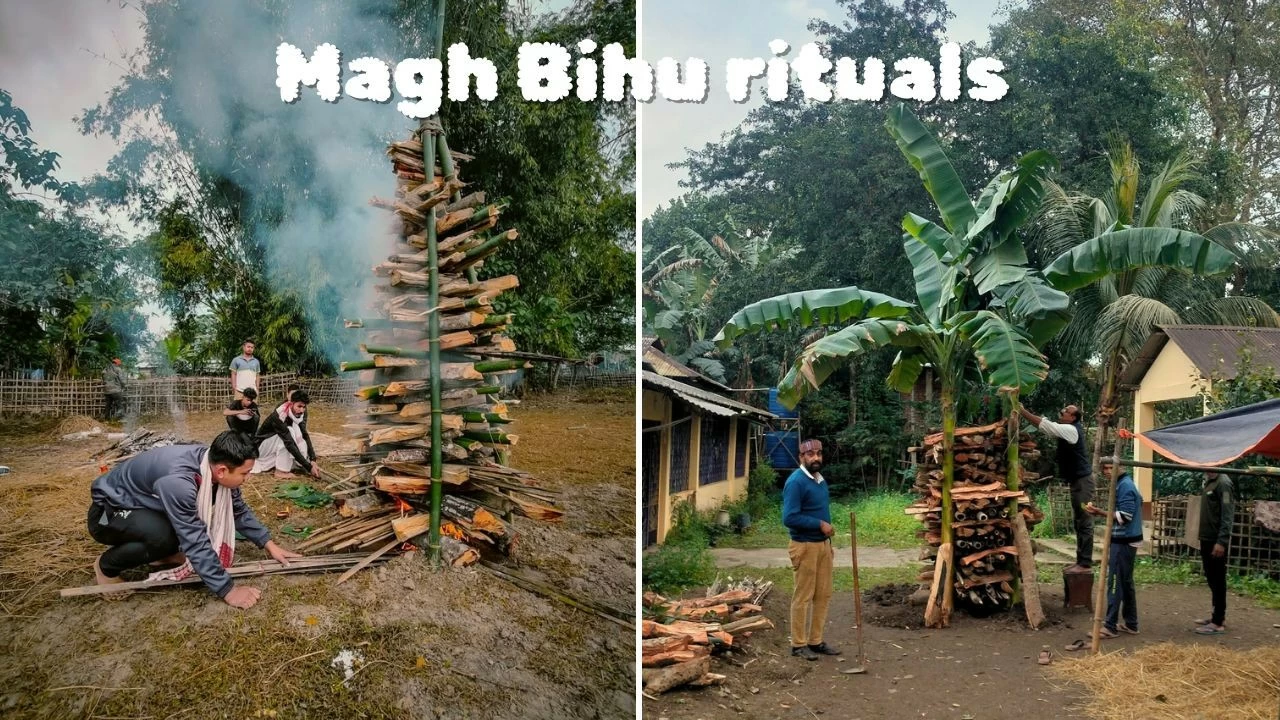
The collected wood, along with bamboo and thatch, is used to build the Meji bonfire and strengthen the Bhelaghar. This reinforces the idea that community effort, not individual possession, fuels the celebration.
Lighting Meji on Magh Bihu morning
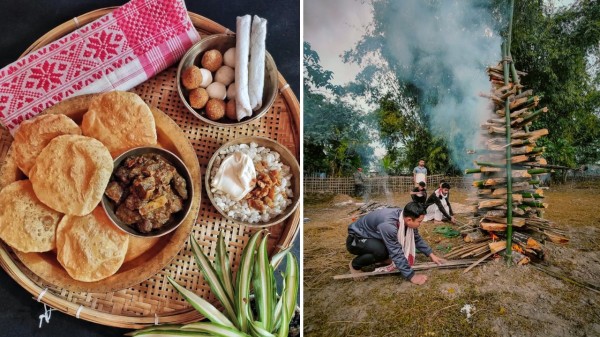
At dawn, families bathe and gather to light the Meji, a bonfire made of bamboo, haystacks and wood. Offerings like betelnut, black gram and rice cakes are made while prayers are offered for prosperity and a good harvest.
The ritual of stealing before Magh Bihu reflects Assam’s deep-rooted belief in joy, sharing and abundance. What looks like playful theft is, in truth, a celebration of harvest, trust and community spirit that continues to warm winter nights across the state.