Sign In
By signing in or creating an account, you agree with Associated Broadcasting Company's Terms & Conditions and Privacy Policy.
By signing in or creating an account, you agree with Associated Broadcasting Company's Terms & Conditions and Privacy Policy.

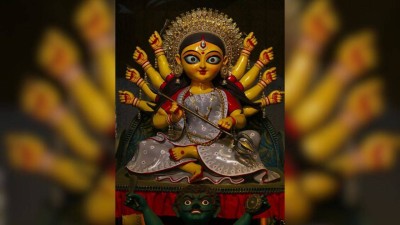
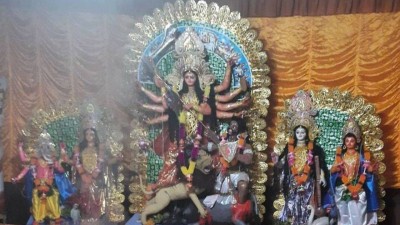
New Delhi: Durga Puja celebrations transform into a great experience every year for devotees, explorers and travellers alike as they all get to witness the gorgeous and grand idols of Maa Durga, draped beautifully in traditional attire and decorated artistically with ornaments. However, have you ever wondered where these idols come from? Durga Puja is particularly celebrated in states like Assam, West Bengal, Odisha and Tripura. And today, we will explore the history of Durga Puja idol making in the context of West Bengal, the main centre of this festivity.
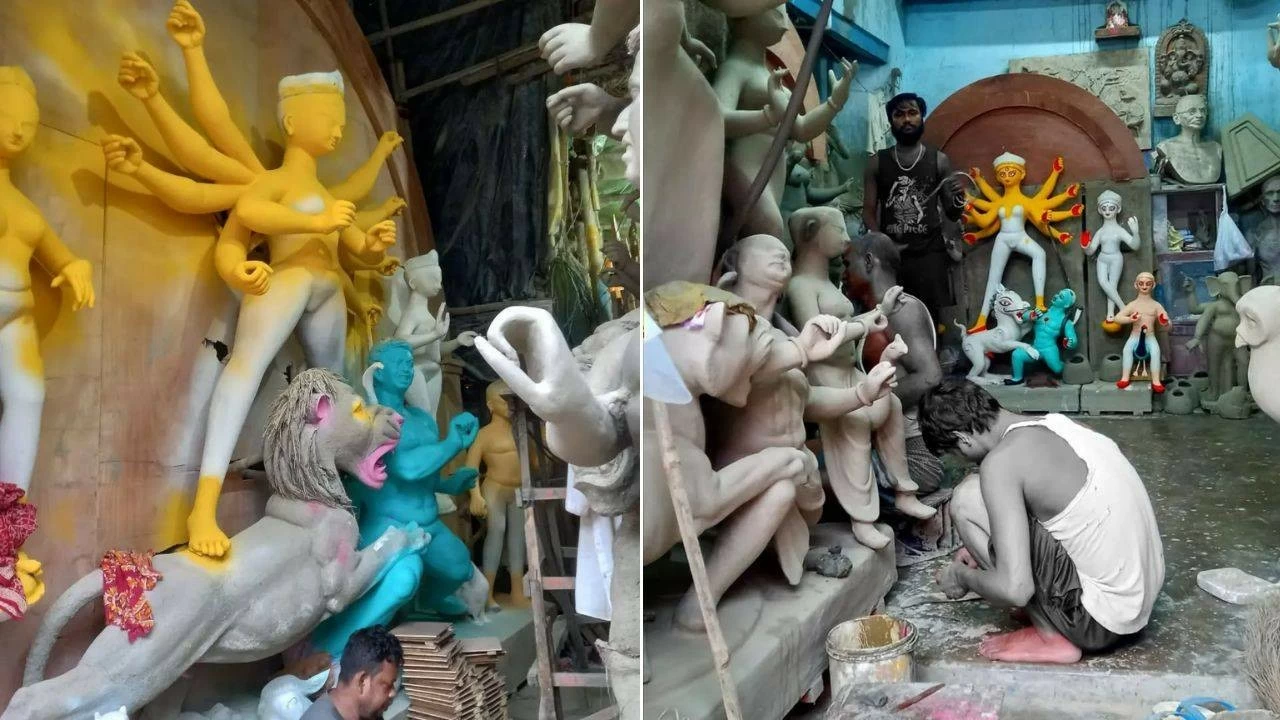
Discover Kumortoli or Kumartuli, Kolkata’s 300-year-old potters’ colony. Nestled in the heart of North Kolkata, many artists create more than 4,000 Durga idols each year at Kumortoli, which dates back to the 1700s. This traditional colony perched by the Hooghly riverside derives its name from the Bangla words kumor, meaning potter, and tuli, meaning locality. It was once a male-dominated craft. Though with changing times, many women are involved in making Durga Puja idols too. Delve deeper for detailed information on the lively lanes of Kumortuli and its artisans.
King Krishnachandra is believed to have initiated the practice of idol worship. To celebrate Durga Puja, he eventually required additional artisans, who came from Krishnanagar in West Bengal’s Nadia district. They settled in a place called Ghurni. Owing to proximity to the River Jalangi or Khoray, clay was easily available at Ghurni, and eventually it grew into the potters’ colony still famous today.
But, Raja Nabakrishna Deb in north Kolkata also began the tradition of Durga Puja celebration at his home around 1757. Artisans were called in from Krishnanagar, and they settled near the Hooghly riverside, creating the potters’ colony we now know as Kumartuli.
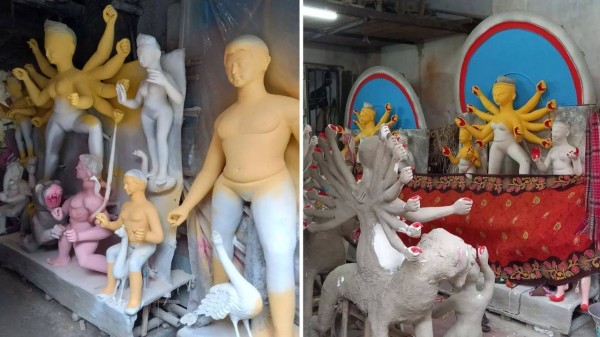
When Durga Puja 2025 begins with Mahalaya on September 21, by this date these idols will be moved from Kolkata to pandals across the city of joy and beyond shores to London, Toronto and New Jersey.
Ahead of Durga Puja, Kumortoli becomes a haven of enthusiastic explorers, including locals, tourists, photographers and bloggers, to witness lanes lined with half-finished idols, and the divine art of creation.
However, Mahalaya is the best time to explore Kumortoli when Chokku Daan takes place. It is the most important ritual when artists perform the symbolic act of giving vision to the goddess by carefully painting almond-shaped eyes. As per beliefs, this is the moment the goddess comes to life in the idol. Explorers can also see other aspects of creation, like sculpting ornaments or applying gold foil.
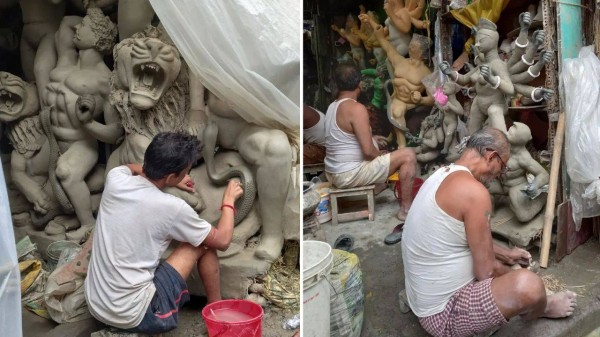
Creating the skeleton structure or the kathamo, made of bamboo and wood, is the first step in making a Maa Durga idol. The straw and river clay are used to form the idol’s structure. The idol is then put out in the sun to dry for a few days before paint is applied.
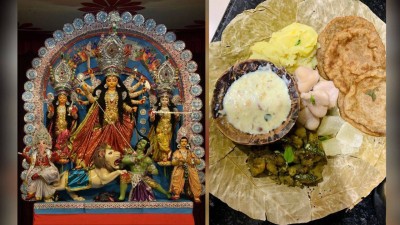
The potters make mainly two styles of Durga idols. One is called ek chala, where all the idols of Durga and her family are on one backdrop, and the other is do chala, which has more than one background; each idol comes with a separate one.
Situated in North Kolkata, Kumortoli is reachable by the Shobhabazar Sutanuti metro station or by taxi. To explore the narrow lanes, walking is the best option.
Do not forget to take permission before clicking portraits of artisans, though photography is welcome.
As the Durga Puja 2025 begins on September 22, do explore Kumortoli ahead of the festivity to experience the divine process of Durga idol formation.