Sign In
By signing in or creating an account, you agree with Associated Broadcasting Company's Terms & Conditions and Privacy Policy.
By signing in or creating an account, you agree with Associated Broadcasting Company's Terms & Conditions and Privacy Policy.
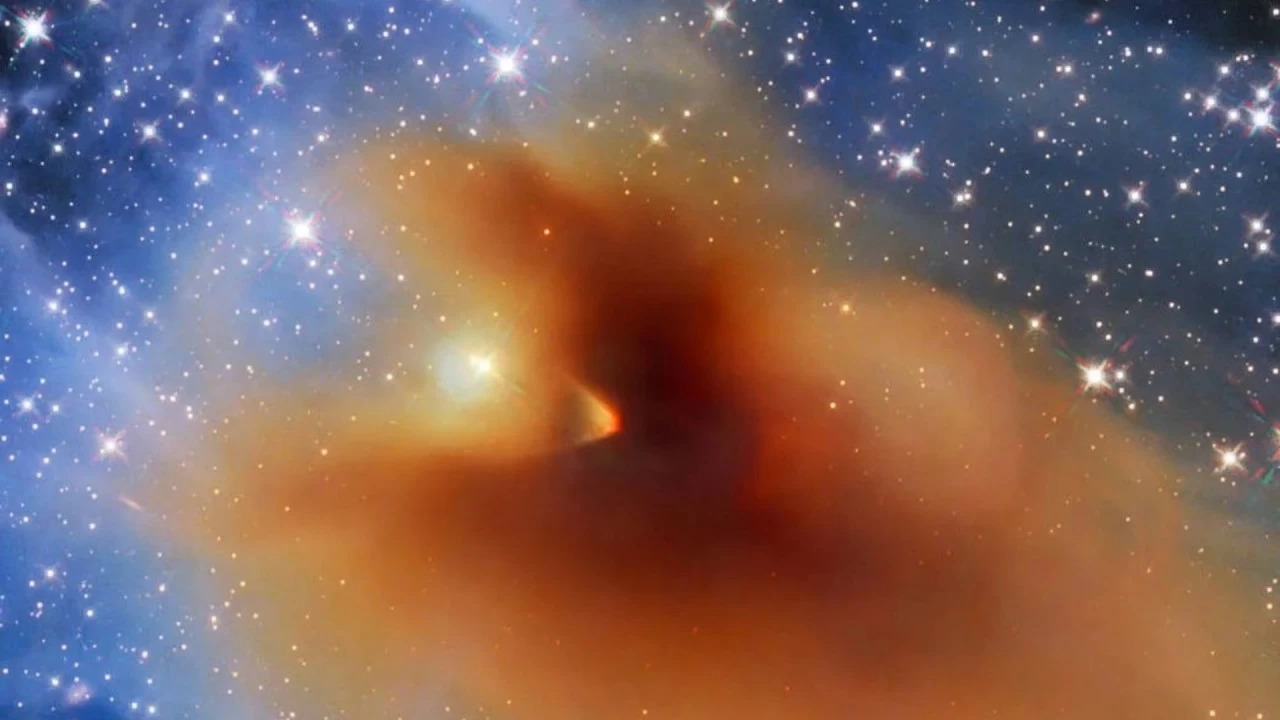


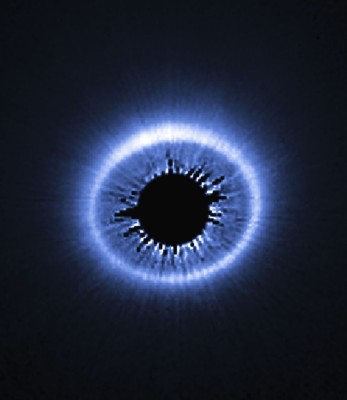
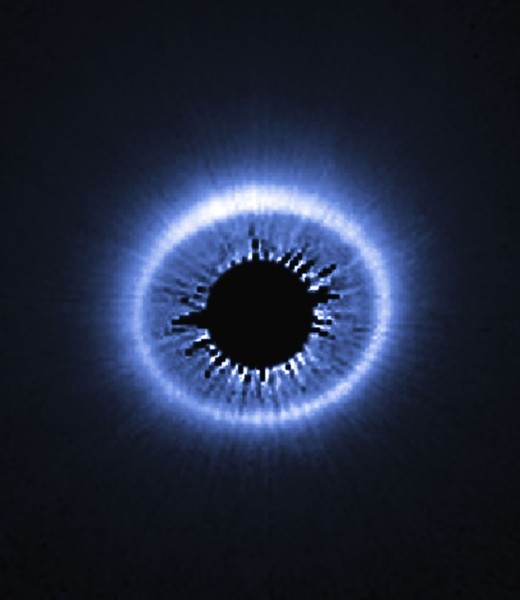
Stars are formed within molecular clouds, dense regions of interstellar gas, mostly hydrogen, embedded with dust. A dense knot forms in the cold gas under the influence of gravity, drawing in more of the surrounding gas and dust, forming a prestellar core, that is a dense clump with no central heating source. As the material continues to collapse, the infalling gas and dust begins swirling around because of a slight initial velocity, and flattens into a disk that feeds the embryonic star.
As the dense core grows in size, the center heats up gradually to thousands of degrees Kelvin. A protostar forms at this stage, supported by gas pressure, still accreting material from the surrounding infalling envelope. The magnetism of the swirling material results in bipolar outflows perpendicular to the accretion disk. A hot corino develops around the protostar, where the ice mantles surrounding the dust grains evaporate, releasing complex organic molecules into the gas phase. The temperature rises sufficiently for the ices in the environment to evaporate, essentially.
As the temperature and pressures rise, the accretion reduces, and the infalling envelope disperses. The object becomes a pre-main sequence star. For solar-mass objects, these are called TT Tauri stars. Both low mass stars and high mass stars fuse hydrogen, but in slightly different ways. Once the pressure and temperatures rise sufficiently for the star to sustain hydrogen fusion, hydrostatic equilibrium is established, allowing the star to maintain its shape, and it enters into the main sequence. For a solar mass star, the process takes between 10 and 50 million years. The planets are assembled in the material leftover from the formation of the star.