Sign In
By signing in or creating an account, you agree with Associated Broadcasting Company's Terms & Conditions and Privacy Policy.
By signing in or creating an account, you agree with Associated Broadcasting Company's Terms & Conditions and Privacy Policy.
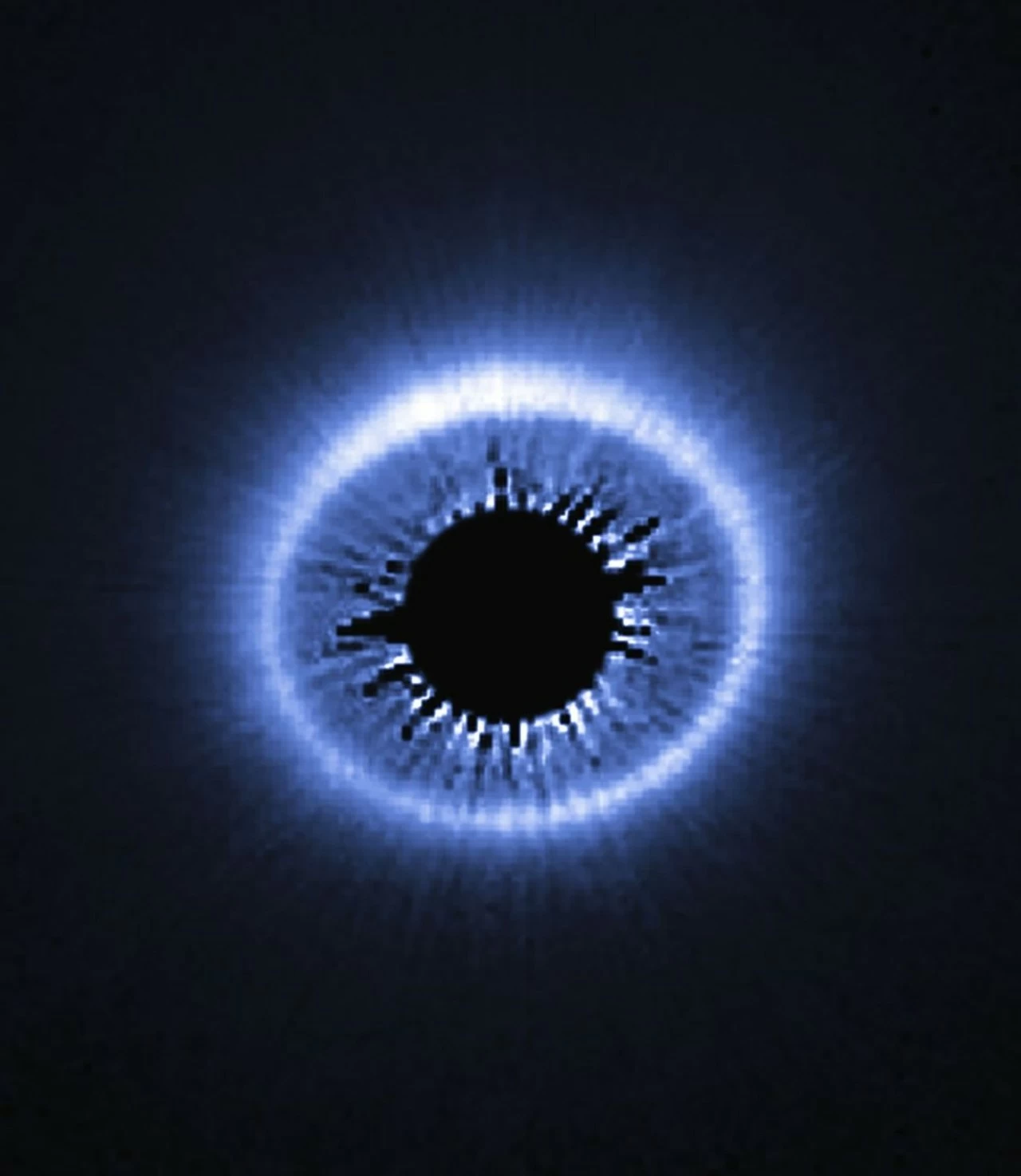


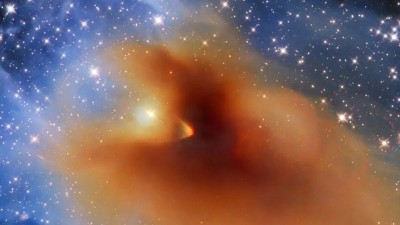
Stars are formed in vast clouds of gas and dust. A dense knot starts accreting material under the influence of gravity, with a slight initial rotation causing the infalling material feeding a growing star into a circumstellar disk. Once the star reaches the temperature and pressure necessary to sustain the fusion of hydrogen into helium, a star is considered to be born. Now, the rest of the planets are assembled from the leftover material. All of the planets are formed in the same plane, because of the circumstellar disk. They also orbit the host star on the same plane. This is the reason all the worlds in the Solar System are arranged along a straight line in the sky.
In the circumstellar disk, dust, ices and gases all clump up. The inner region around the host star contains mostly rocky material, with the ices and gases blown away. Here, pebbles clump up into boulders, which clump up into mountains, which them accumulate into worlds. Once an object reaches around 450 km in diameter, it assumes a round shape under the influence of hydrostatic equilibrium. Then the interior becomes differentiated, forming a core, mantle and crust. The heavier elements sink to the bottom, towards the core, while the lighter elements float on top. At times, such protoplanets can be battered to bits.
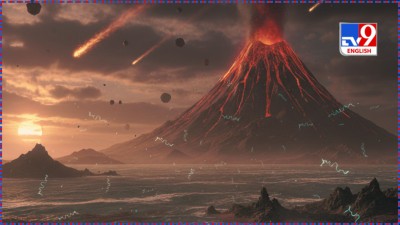
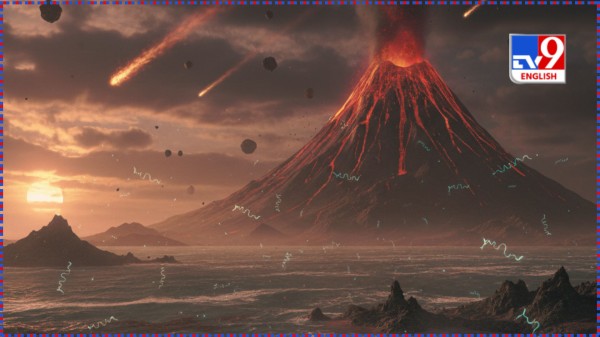
There are cataclysmic collisions in the early stages of planet formation, where worlds may pulverize others. The metallic asteroid Psyche may be a stripped core of a long-lost planet. An object called Theia, about the size of Mars smashed into the Earth in the infancy of the Solar System, forming the Moon. In the outer reaches of a star system, where the ice and gas is not blown away, gas giants and ice giants can form. There is not sufficient material for such large worlds to form in the inner star system. These worlds have a dominant gravitational influence, and may prevent the formation of some worlds, and eject others outside the system. At times, such worlds can migrate inwards to the host star after formation, resulting in Hot Jupiters.
Our astronomical instruments have detected massive collisions in circumstellar disks, as well as gaps where new planets are being formed around distant stars. What is surprising to the scientists is the staggering variety of worlds that we are finding out there, that are unlike any in the Solar System, including puffballs, super Earths, water worlds, Hyceaen planets and exotic rocky worlds. Humans know of over 6,000 exoplanets now, but not a single rocky world in a habitable zone around a Sun-like star.