Sign In
By signing in or creating an account, you agree with Associated Broadcasting Company's Terms & Conditions and Privacy Policy.
By signing in or creating an account, you agree with Associated Broadcasting Company's Terms & Conditions and Privacy Policy.
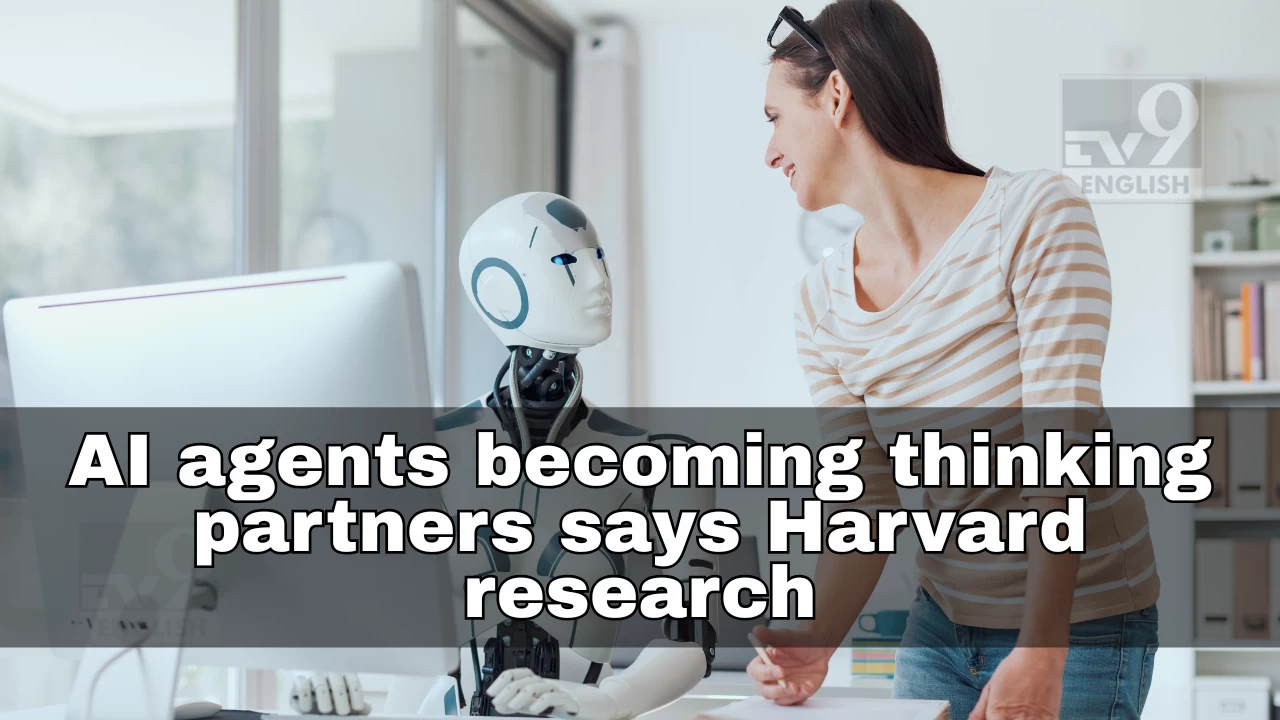


New Delhi: AI agents have become a normal part of daily digital life in 2025. A new study by Perplexity and Harvard researchers tries to understand exactly how people are using these tools in the real world. Instead of guessing, they looked at what hundreds of millions of actual users did with agent features inside Perplexity’s Comet and Comet Assistant.
When agents first arrived inside chat apps. Many of us treated them like toys, asking for movie lists or holiday plans. This research says that is only the starting phase. Over time users change the way they use these tools and start relying on them for serious thinking and work.
The study says 57 percent of all agent activity focuses on cognitive work. These include productivity tasks at 36 percent and learning or research tasks at 21 percent. The report explains that users want a “thinking partner more than a butler.”
Examples given by the researchers include:
The study states that people are not using these agents to avoid work. They are using them “to do better work” by letting the assistant gather information and then deciding the final answer or action.
A strong trend in the research shows how usage changes over time. On day one people stick to fun and safe tasks like restaurant ideas or quiz questions. But by day 100 the same users are debugging code or summarising long reports.
The researchers say this pattern is similar to the early personal computer era. PCs were sold for games and home tips, but became essential for spreadsheets and word documents. AI agents are moving the same way into productivity territory.
The study highlights that adoption rates are different from usage intensity. Six occupation groups drive nearly 70 percent of activity. Digital technologists are expectedly high at 30 percent. Marketing, sales, management and entrepreneurship show high “stickiness” which means they continue using agents frequently after adopting them.
Students focus more on learning, about 43 percent of their queries. Finance workers put 47 percent of their usage into tasks that boost efficiency. Designers and hospitality workers use agents more for their specific day to day needs.
More than half of all usage still happens in personal contexts. It could be anything from planning life goals to help with hobbies.
The report calls this era a movement toward a “hybrid intelligence economy.” A line from the research notes “we are moving toward a workforce that thinks, learns, and builds with an intelligent partner always in the loop.” That means AI agents are not replacing human decisions. They are changing how humans reach those decisions.
As these tools mature, productivity tasks could remain the most important area for growth. Many companies and education institutions may need to update how they train or measure work because people are already outsourcing parts of the thinking process to software.
The full paper with data and methodology is available publicly on arXiv.
The researchers say the core shift has already happened. Now it is about how fast the rest of the world catches up.