Sign In
By signing in or creating an account, you agree with Associated Broadcasting Company's Terms & Conditions and Privacy Policy.
By signing in or creating an account, you agree with Associated Broadcasting Company's Terms & Conditions and Privacy Policy.
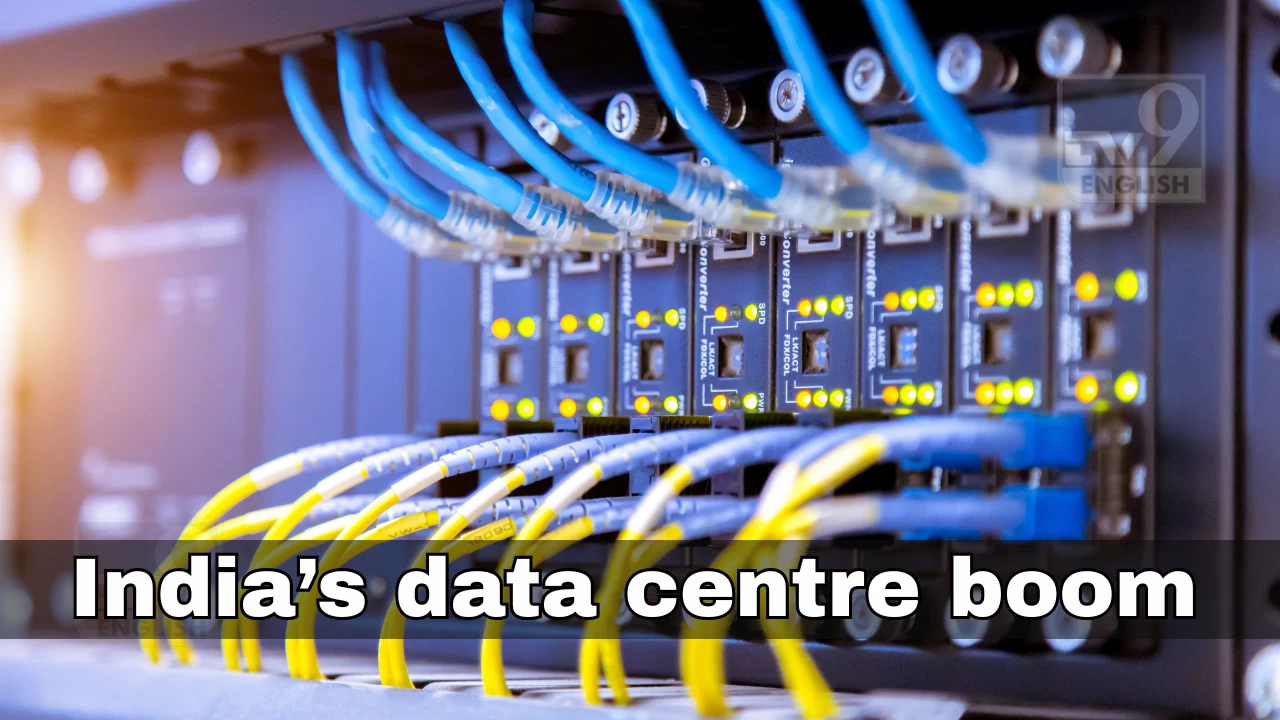
New Delhi: India’s push to become a global digital powerhouse is gaining momentum, with a new report stating that the country’s data centre capacity could double in the near term and expand up to five times by 2030 if planned projects are fast-tracked. The rapid rise of artificial intelligence, cloud computing and data localisation policies is transforming data centres into strategic national infrastructure, similar to power grids and highways.
According to a report by Macquarie Equity Research, India currently operates around 1.4 gigawatts (GW) of data centre capacity. An additional 1.4 GW is already under construction, and another 5 GW is in the planning pipeline. If these projects proceed on schedule, India could emerge as one of the fastest-growing data centre markets in the world this decade.
The report highlighted that India’s growth is being powered by multiple factors including government subsidies, favourable regulatory policies, and growing demand for cloud services from enterprises and startups. Data localisation norms, which require certain types of data to be stored within the country, are also contributing to the surge in domestic capacity.
Cities such as Mumbai and Chennai are currently leading the market. Mumbai alone accounts for around 40 percent of the country’s operational data centre capacity, placing it slightly ahead of Hong Kong in installed capacity. Chennai contributes around 20 percent and is emerging as a key hub due to its coastal access and strategic connectivity to Southeast Asia.
The report also pointed to recent gigawatt-scale announcements by global and domestic technology firms. Earlier this month, Google committed USD 15 billion to build an artificial intelligence infrastructure hub in Visakhapatnam, in partnership with the Adani Group. The project includes a gigawatt-scale data centre as a central component.
Tata Consultancy Services has also announced USD 6.5 billion to build a 1 GW data centre network, signalling strong domestic participation in the sector. Other major investments include Jio’s plans for a fully integrated green AI facility and AWS’s USD 13 billion commitment to expand its cloud capacity in India by 2030.
As data consumption rises, the report noted that data centre energy use is set to grow significantly. The share of national electricity demand from data centres is projected to rise to between 1.9 and 3.2 percent by 2030, up from 0.8 percent in 2024. Capital expenditure, excluding servers, is expected to reach USD 30 to 45 billion over the next five years.
However, the report warned that rapid expansion could strain local ecosystems, particularly in urban hubs. Mumbai and Chennai, which host the largest share of current capacity, face severe water scarcity and rising energy demand. The report said India needs a dedicated national data centre policy that includes water usage norms alongside land and power support.
If planned projects move forward on time, India could position itself as a global centre for AI and cloud infrastructure. Faster regulatory clearances, improved infrastructure planning and sustainable resource management will be key in turning pipeline capacity into operational facilities.
The report concluded that India has a once-in-a-generation opportunity to build the backbone of its AI economy. The next few years will determine whether the country can convert this pipeline into capacity that powers the digital services of the future.