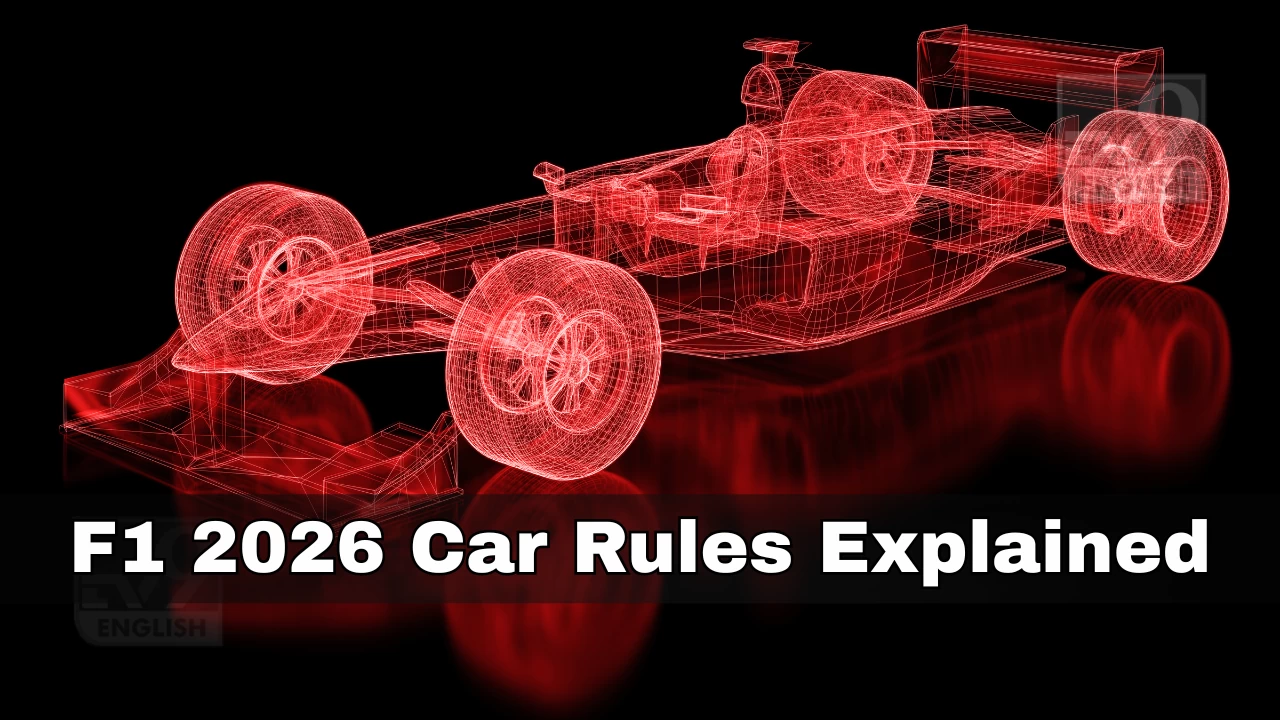
New Delhi: Formula 1 is getting ready for one of its biggest rule resets in decades, and the first official renders of the 2026 cars are now out. The FIA has laid out how the next generation of F1 machines will look and work, and the changes are not small. From how the cars slice through air to how drivers deploy electric power, almost everything is being rethought.
For fans who follow both racing and road cars, this matters more than it sounds. Formula 1 often acts like a testing ground for tech that later reaches regular cars. The 2026 rules aim to make racing closer, cars lighter, and engines more relevant to the real world. Teams like Ferrari and Mercedes will not be alone anymore. Audi joins in 2026, Red Bull builds its own engines with Ford, and Honda is back.
Smaller, lighter cars are finally coming back
One of the biggest complaints in recent years was how large and heavy F1 cars had become. The FIA has addressed that directly. From 2026, the cars will be shorter, narrower, and lighter. The wheelbase shrinks, tyres remain 18-inch but get narrower, and even small aero parts like wheel arch winglets are gone.
This should make cars more agile in corners. If you remember watching older onboard clips from the early 2000s. Cars looked nervous, twitchy, alive. The new rules seem to push F1 a little back in that direction.
Goodbye ground-effect tunnels, hello flatter floors
The current cars rely heavily on complex ground-effect tunnels under the floor. That era ends in 2026. Floors will be flatter, with simpler diffusers and bigger openings. Downforce drops, ride height goes up, and teams get more freedom with set-ups.
For racing, this matters. Less sensitive aero means cars can follow each other more closely without losing grip. That usually leads to better battles, fewer trains, and more mistakes. Fans like that.
Active Aero replaces DRS
DRS as we know it will disappear. In its place comes Active Aero. Both front and rear wings can change angle. In corners, wings stay closed for grip. On designated straights, drivers can open them to cut drag and boost speed. This is available to everyone, every lap.
There is still an attack tool though. Overtake Mode kicks in when a driver is within one second of the car ahead. It unlocks extra electric energy for attacking. Drivers also keep a Boost button, which they can use anywhere on the lap if battery charge allows.
Engines shift toward electric power
Under the engine cover, the change is massive. The 1.6-litre V6 turbo stays, but the electric motor now does much more work. Power split moves close to 50:50 between petrol and electric. The complex MGU-H system is removed, cutting cost and weight.
Energy recovery doubles per lap, mainly through braking. Drivers will manage battery use more actively, working closely with engineers. This makes races more tactical, not just flat-out driving.
Sustainable fuel and stronger safety rules
From 2026, all F1 cars will run on advanced sustainable fuel. It is made from sources like waste and carbon capture and has already been tested in junior series.
Safety also improves. The survival cell faces tougher tests, the roll hoop gets stronger, and the front crash structure is redesigned to handle secondary impacts better.
Why this reset matters
These rules were shaped by the FIA with teams and Formula 1 management. The goal was clear. Bring more manufacturers, closer racing, and tech that connects better with road cars. For fans, it means cars that are harder to master and races that feel less predictable.
From what I see, 2026 will not just look different. It will feel different. And that is something Formula 1 badly needed.