Sign In
By signing in or creating an account, you agree with Associated Broadcasting Company's Terms & Conditions and Privacy Policy.
By signing in or creating an account, you agree with Associated Broadcasting Company's Terms & Conditions and Privacy Policy.
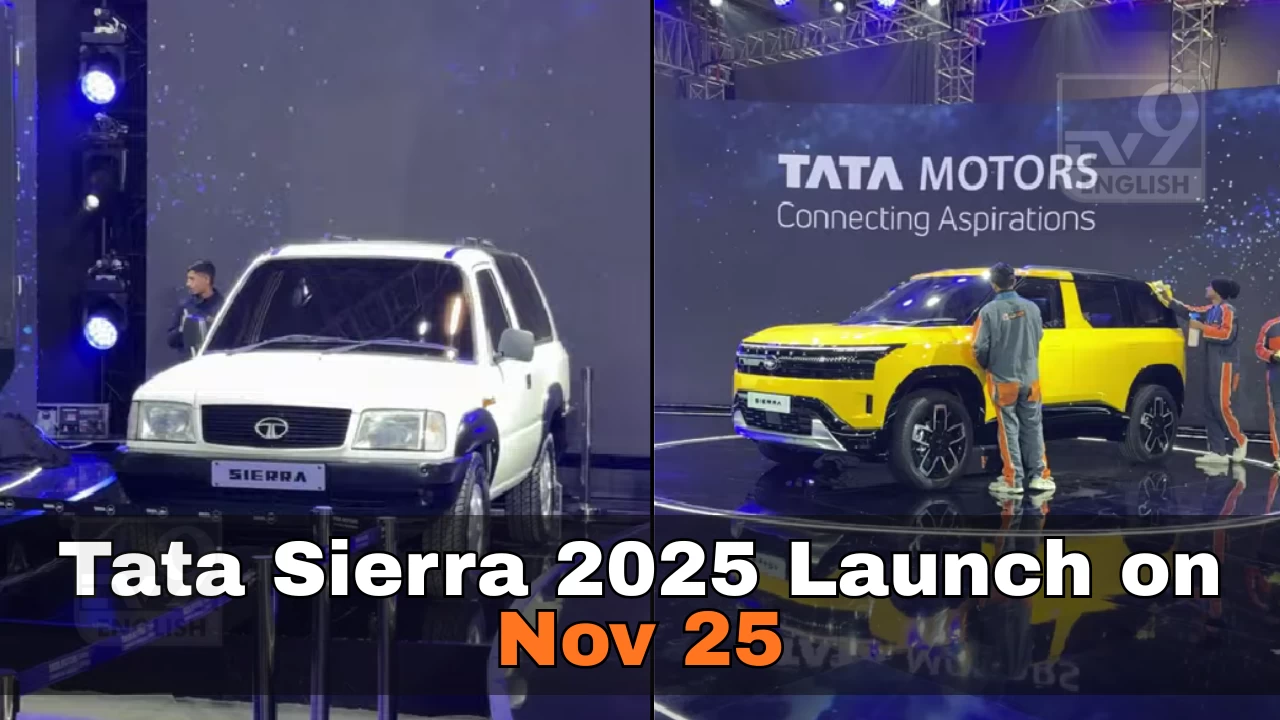

New Delhi: After more than three decades, Tata Motors is reviving one of its most loved SUVs, the Sierra. Many still remember the original Sierra from the 1990s for its unique design and the wraparound rear glass that made it instantly recognisable on Indian roads. The upcoming version, however, is not just a nostalgic revival. It’s an all-new midsize SUV built for modern buyers, with new engines, tech, and even an electric version in the pipeline.
The new Tata Sierra will sit between the Curvv and Harrier in Tata’s SUV lineup and will compete with the Hyundai Creta, Kia Seltos, and Honda Elevate. Tata is expected to price the petrol version around ₹11 lakh, while the top-end EV variant could go up to ₹25 lakh (ex-showroom).
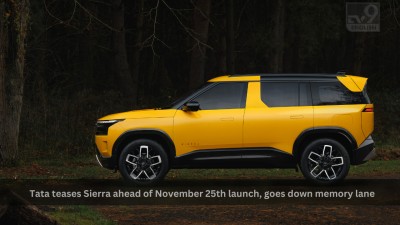
The new Sierra keeps the soul of the original alive but with a sharper, cleaner design. It retains the signature wraparound rear glass, now paired with split LED headlamps, a full-width LED tail bar, and squared wheel arches. The front end looks more polished with dark chrome accents and vertically stacked fog lamps, while the side profile has flush door handles and a more aerodynamic shape.
Compared to the older two-door SUV, the new Sierra will have four doors for better practicality. The 19-inch alloy wheels give it a more planted look, a step up from the chunky 15-inch wheels on the 90s model. Even small details, like the missing roof rails and reduced plastic cladding, make it look smoother and more upscale.
The interior is where the new Sierra truly breaks from the past. The cabin now has three 12.3-inch screens spread across the dashboard, one for the driver, one for infotainment, and one for the front passenger. It’s a setup rarely seen in this segment. The dashboard uses soft-touch materials, a dual-tone layout, and ambient lighting running across the front.
The old Sierra was famous for its simplicity, with a basic cabin and no major tech features. This one, on the other hand, supports connected car technology, wireless phone features, and digital controls for almost everything inside. It feels like Tata wants to build an SUV that appeals to both nostalgic buyers and tech enthusiasts.
The Sierra’s engine options are expected to include:
All variants will get manual and dual-clutch automatic transmission options. The electric Sierra, which will arrive later, is expected to share its underpinnings with the Harrier EV and come with two battery pack options. The larger pack could deliver over 500 km of range on a single charge. Fast charging and bidirectional charging support will also be part of the setup.
Back in 1991, the first Tata Sierra came with a 2.0-litre diesel engine producing about 90 bhp, a five-speed manual gearbox, and even a 4x4 option. It was way ahead of its time but lacked the refinement expected by modern drivers. The new Sierra, in contrast, is loaded with features, smarter engines, and electric capabilities, yet still carries the DNA of the original.
From the two-door rugged off-roader to a sleek, tech-filled family SUV, the Sierra’s comeback is a reminder of how far India’s automotive industry has come.
The launch on November 25 will mark a major moment for Tata Motors, as it brings back one of India’s most loved automotive names into a market that has changed completely since its debut. For enthusiasts like me who remember spotting the old Sierra on highways in the late 90s, it’s exciting to see this icon get another shot, only this time, it’s built for a new generation.